Expanding Cashew Exports Through Nadkansco Processing Ltd
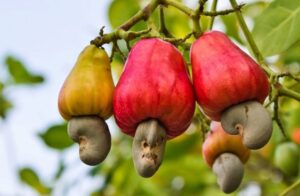
Ghana’s efforts to expand agro-processing, cashew exports and retain more value from its agricultural commodities have received a significant boost through Nadkansco Processing Ltd., a licensed Free Zones Enterprise, in Techiman in the Bono East Region.
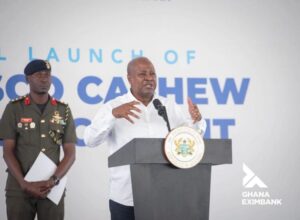
President John Dramani Mahama commissioned the cashew processing facility marking a major investment in the country’s ambition to transition from exporting predominantly raw agricultural commodities to developing competitive, value-added manufacturing industries.
Operating under the theme, “Beyond Raw Cashew, Value Addition Matters,” the factory is expected to strengthen Ghana’s cashew value chain through local processing, employment creation, farmer engagement and increased export earnings.
Speaking at the ceremony, Managing Director of Nadkansco Processing Ltd., Madam Belinda Akorfa Adokpa, disclosed that the company projects approximately US$40 million in annual foreign exchange earnings from its operations.
“The company is projected to generate approximately US$40 million in annual foreign exchange earnings, creating significant opportunities for Ghana’s agro-industrial and export sectors.”
Processing Capacity to Expand Export Earnings
The Nadkansco facility has an installed processing capacity of 100 metric tonnes of raw cashew nuts per day, positioning it to support large-scale domestic processing and supply cashew products to international markets.
At full operational capacity, the factory is expected to create approximately 1,500 direct jobs and 3,000 indirect employment opportunities, bringing the projected employment impact to 4,500.
The projected US$40 million in annual foreign exchange earnings also highlights the potential contribution of agro-processing to Ghana’s external trade performance.
Rather than exporting raw cashew nuts with limited domestic processing, the investment seeks to retain a greater proportion of the commodity’s economic value within the country through local manufacturing.
The Ghanaian cashew industry has significant production potential, but limited domestic processing has historically constrained the amount of value retained within the local economy.
Industry estimates have placed annual raw cashew production at approximately 262,000 metric tonnes, while domestic processing accounts for less than six per cent of production.
“With a processing capacity of 100 metric tonnes daily, the facility is expected to create 1,500 direct jobs and 3,000 indirect employment opportunities.”
Outgrower Scheme Strengthens Farmer Linkages
Beyond its industrial capacity, Nadkansco is incorporating agricultural production into its operational model through an outgrower scheme designed to strengthen relationships with local cashew farmers.
According to the company’s Managing Director, 1,247 farmers have already received training to support the factory’s raw material supply chain. The initiative is expected to improve the connection between primary agricultural production and industrial processing by developing a more structured supply arrangement between farmers and the company.
Reliable access to raw materials remains one of the most important requirements for sustaining agro-processing operations. Factories operating below capacity because of inconsistent agricultural supplies often face higher production costs and difficulties meeting export orders.
Through farmer training and supply-chain development, Nadkansco is seeking to establish a stronger production base capable of supporting its processing requirements.
The arrangement also presents opportunities for farmers to participate more directly in the commercial benefits of the cashew industry.
Improved production practices, better-quality nuts and stronger market linkages can contribute to agricultural productivity while providing processors with a more dependable supply of raw materials.
The company’s contribution to local development also extends beyond its commercial activities.
Nadkansco has donated four ambulances to support healthcare delivery in four districts, providing additional assistance to communities within its operational environment.
President Mahama, in his address, emphasised the importance of increasing investment in domestic processing and manufacturing to strengthen Ghana’s industrial base.
His call reflects the government’s broader economic objective of reducing dependence on raw commodity exports while expanding domestic production and value addition.
Government Seeks Stronger Agro-Industrial Investment
The Minister for Trade, Agribusiness and Industry, Elizabeth Ofosu-Adjare, also highlighted the conditions required to sustain investments in Ghana’s agro-industrial sector.
The Ghana Free Zones Authority (GFZA), which participated in the commissioning ceremony, reaffirmed its commitment to supporting investments that promote local value addition, employment creation and export expansion.
The Authority’s delegation was led by its Chief Executive Officer, Dr Mary Awusi, accompanied by managers and officers from its Bono East and Ashanti Regional Offices.
The commissioning reinforces the importance of collaboration between government institutions, private investors and agricultural producers in developing a competitive agro-industrial economy.
“Reliable raw material supplies, access to financing and markets are essential to strengthening Ghana’s agro-industrial sector.”
The projected US$40 million annual foreign exchange earnings and 4,500 direct and indirect jobs represent significant targets whose achievement will depend on the company’s operational performance and market conditions.