GNACOPS Backs BECE Ban, Raises Concerns Over School Placement
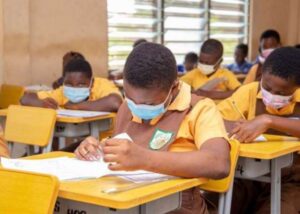
The Ghana National Council of Private Schools (GNACOPS) has backed the Education Ministry’s decision to bar Junior High School (JHS) One and Two pupils who attempt to sit the Basic Education Certificate Examination (BECE) prematurely from taking the examination for two years, while calling for an independent review of concerns about grading and senior high school placement.
The council says enforcement must be matched with transparent assessment and equal opportunities.
“Discipline and fairness are not competing demands. They are inseparable duties.”
In a position issued on November 23, GNACOPS endorsed Education Minister Haruna Iddrisu’s directive, announced at the opening of the 2026 National Education Week in Accra. The minister instructed the Ghana Education Service (GES) to communicate the measure to regional directors and school heads
GNACOPS Backs Tougher Controls On Premature BECE Registration
GNACOPS maintains that the BECE should mark the completion of the full three-year JHS programme, rather than become an examination pupils are pushed into before completing the prescribed learning process. The West African Examinations Council (WAEC) states that school candidates must be in the third year of an approved junior high school.
The examination combines 30 per cent continuous assessment with 70 per cent external examination results. WAEC also requires schools to maintain candidates’ assessment records and warns against registering pupils who are not bona fide final-year students.
The council said fabricated school histories or assessment records threaten examination integrity. It supports candidate verification and consistent enforcement, with procedures to correct genuine administrative errors.
The minister’s directive targets pupils who advance themselves from JHS One or Two into the final year to qualify for the examination ahead of schedule. He has argued that the practice undermines fairness and complicates education planning.
Private Schools Seek Clarity On Senior High School Placement
GNACOPS argues that enforcement alone may not address the pressures driving some parents to pursue early registration. It pointed to concerns about access to highly sought-after public senior high schools through the Computerised School Selection and Placement System (CSSPS).
The council questioned whether placement arrangements disadvantage pupils in recognised private schools. It supports targeted assistance for disadvantaged pupils, provided the measures are clearly defined and transparent.
The debate includes the reservation of Category A school places for public basic school graduates. Media reports in June 2025 said the reservation had been reduced from 30 per cent to 15 per cent for that year’s placement exercise.
In July 2026, however, Education Minister Haruna Iddrisu told Parliament that at least 30 per cent of Category A vacancies were reserved for public basic school graduates. GNACOPS wants the Ministry to publish a definitive explanation of the current rule and its eligibility conditions. The Ministry has also announced a CSSPS review following concerns from the Ghana Catholic Bishops’ Conference
Council Calls For Independent Review Of BECE Results
The council is urging WAEC, the Ministry of Education and GES to examine concerns from private-school stakeholders about perceived disparities in BECE grading and placement outcomes. It wants results compared by school category, taking account of prior attainment, subjects and districts where possible. It also seeks clearer explanations of marking, moderation, assessment verification and results appeals.
Publishing the findings, whether or not irregularities are established, would help address suspicion and strengthen confidence, the council argued. It also proposed releasing BECE and placement statistics by school category and conducting independent audits of candidate records and placement decisions.
GNACOPS Proposes Reforms To Protect Every Ghanaian Child
GNACOPS wants uniform enforcement of BECE eligibility rules, clearer CSSPS guidelines and equity measures that consider socioeconomic disadvantage, location and school-level deprivation rather than rely mainly on a public-versus-private distinction.
It proposes a technical dialogue involving the Ministry, GES, WAEC, CSSPS administrators and private-school representatives, alongside education for parents and headteachers on transfer procedures and premature registration.
Citing England’s approach to admission outside a child’s normal age group, GNACOPS said decisions should be made individually and in the child’s best interests, as required by UK government guidance. GNACOPS stressed that it was not seeking preferential treatment for private schools.
“It is a demand that no Ghanaian child be disadvantaged merely by the ownership status of the school he or she attends.”
The council offered to cooperate with education authorities on eligibility controls, while calling for urgent engagement on examination fairness and placement transparency.