2027 Budget Promises Fair Pay Through Independent Emoluments Commission

By Leo Nelson
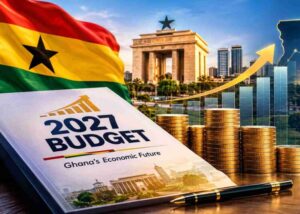
Ghana’s Finance Minister Dr Cassiel Ato Forson has told Parliament that the government will transform the Fair Wages and Salaries Commission into an Independent Public Emoluments Commission (IPEC) over a two-year transition. He announced the plan in the 2027 Budget on Thursday, November 12, 2026.
Dr Forson explained that the reform targets pay disparities that have built up since the Single Spine Pay Policy began in 2010. The government will submit an IPEC Bill in 2027, seek constitutional changes and put four pay policies in place, and Dr Forson stressed that none of this amounts to a wage freeze.
“Today, two public service workers with similar qualifications, doing similar work, can take home very different pay simply because of where they work.”
Single Spine Fairness Has Eroded
The Single Spine Pay Policy aimed to deliver equal pay for work of equal value across the public service through a unified salary structure. Dr Forson told the House that fairness has worn away over the years.
New allowances multiplied, special salary arrangements were granted, some institutions won exemptions, and pay decisions came piece by piece, outside the system.
Compensation takes a large share of government spending, he noted, so unfair or unplanned pay decisions strain public finances, divert resources from essential services and undermine industrial harmony.
The government wants a pay system that is fair, transparent and affordable, rewards hard work, keeps industrial peace and gives Ghanaians value for every cedi.
Why the Fair Wages Commission Is Being Replaced
Dr Forson credited the Fair Wages and Salaries Commission with important work but argued that it never had enough independence. Political and administrative pressures reached it, he explained, and some pay decisions ignored the principles of job evaluation and reward management or what the nation can afford.
The commission has featured in recent disputes. Teacher unions went on strike nationwide as collective agreement talks stalled with it, and the Ministry of Education later commended the unions for suspending the action.
A good salary structure is not enough, Forson argued. The country needs a strong institution with the authority to protect that structure, whatever the pressure. President John Dramani Mahama therefore announced the transition, and Dr Forson described IPEC as a “credible, independent, and technically competent national institution.”
It will regulate and monitor public sector pay, correct today’s unfairness, stop new disparities and strengthen fiscal discipline.
A Two-Year Transition, Not a Rebrand
The government has designated 2027 and 2028 as the transition period to restructure the pay system and to establish and operationalise IPEC. Forson used the two years to lay out the foundations: legal, constitutional, institutional, technical and policy.
“Let me be clear: this is not a change of name.” He insisted that the reform changes how salaries, allowances and benefits are decided, negotiated, regulated and managed.
Four Phases to Reform
The first phase brings the IPEC Bill to Parliament in 2027, with coverage of public institutions and State-Owned Enterprises. The second pursues constitutional amendments to make IPEC a constitutional body, which Dr Forson said will protect its independence and let it outlive any one government.
The third phase puts a question to voters. Ghanaians will decide through a national referendum, in line with the Constitution, whether Article 71 Office Holders should also fall under IPEC. The group includes the President, Ministers of State, Members of Parliament and Justices of the Superior Courts.
The fourth phase puts four policies in place during the transition. A National Public Sector Emoluments Policy will set the rules for how all public pay is determined. A National Negotiations Policy will make pay talks orderly, predictable and based on evidence.
A Performance-Based Pay Policy will link pay to results, and a comprehensive framework will bring order to allowances and benefits, which Forson called a crowded and uneven field. Together, he stated, the reforms will align pay with productivity, the cost of living, institutional performance and what the nation can afford.
Restraint on New Allowances, but No Wage Freeze
The government will exercise restraint in approving new allowances, special salary structures, wholesale reviews of conditions of service and other arrangements that could undermine the reform. Dr Forson assured Ghanaians that the plan is “not a wage freeze.”
Existing lawful obligations will be honoured, and established negotiation processes will continue. What ends, he explained, is the piecemeal approach that produced today’s distortions.
State-Owned Enterprises and Organised Labour
For State-Owned Enterprises, one size will not fit all, Forson noted, because their finances and markets differ. Their boards will keep drawing up remuneration proposals within a transparent national framework, and IPEC will work with the State Interests and Governance Authority (SIGA) on it.
The government called on Organised Labour, public institutions, State-Owned Enterprises and other stakeholders to back the 2027 to 2028 reform. Its stated goal is a pay system that is fair to every worker, trusted by every citizen and rewards productivity, with greater value from every cedi spent.
Dr Forson summed up the pledge as fair pay, fair rules and “a fair referee.” The IPEC Bill, due in 2027, will give Parliament and Organised Labour their first chance to test how far the plan matches its promise.