Ghana Targets First Locally Made Tetanus-Diphtheria Vaccine by 2027
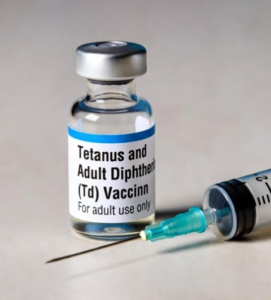
Ghana is targeting the manufacture of its first vaccine, the tetanus diphtheria vaccine, by 2027, with the National Vaccine Institute (NVI) confirming that the project remains on course following the arrival of the first bulk substance in the country.
Chief Executive Officer of the NVI, Dr Sodzi Sodzi-Tettey, disclosed this during the commissioning of vaccine research and development facilities at the Noguchi Memorial Institute for Medical Research, outlining progress on local production, pharmaceutical policy reforms and investments intended to establish Ghana as a manufacturing hub.
“We have set ourselves the timeline of 2027 to manufacture Ghana’s first vaccine, the tetanus diphtheria vaccine. And we are really on track.”
Dr Sodzi-Tettey explained that the first of three bulk substances required for the tetanus diphtheria vaccine had arrived in Ghana and was at the premises of Atlantic Life Sciences, where the manufacturing process is underway.
The arrival marks a concrete step in the production schedule, although two other bulk substances are still required before the full manufacturing process can proceed.
He attributed the development to a grant agreement negotiated by the Minister of Health with the Government of Indonesia. The agreement enabled the bulk substance to be manufactured in Indonesia before being shipped to Ghana for use in the local production process.
According to the NVI Chief Executive, sourcing the substance through the arrangement is expected to reduce production costs and, ultimately, make the vaccines more affordable for the Government of Ghana.
He indicated that work was also progressing to connect Ghana’s research activities with other mRNA hubs supported by the Africa Centres for Disease Control and Prevention (Africa CDC) and the International Vaccine Institute.
Pharmaceutical Policy and Local Manufacturing
Dr Sodzi-Tettey further highlighted the passage of Ghana’s pharmaceutical manufacturing policy about a month before his address, describing it as a significant step after nearly a decade of discussions.
The policy contains interventions to support President John Dramani Mahama’s vision of positioning Ghana as a pharmaceutical hub in Africa.
The tax exemption granted to the imported bulk substance for the tetanus diphtheria vaccine, he noted, demonstrated the policy’s practical application. The policy’s provisions are intended to translate the country’s manufacturing ambition into operational support for local producers, research institutions and the skilled workforce required by the industry.
The policy also identifies skills shortages that could constrain the sector’s expansion. To address these gaps, the NVI, in partnership with the Pharmabas project, is expected to launch the Ghana Biomanufacturing Training Consortium by the end of the year.
The consortium will unite academia and industry to address skills gaps across six pillars and prepare workers for a shift from fill-and-finish operations to end-to-end vaccine production.
Vaccine Training and Procurement Reforms
He also recalled that, during the Africa Vaccines Manufacturing Investment Forum in August last year, President Mahama directed the NVI to submit a Cabinet memorandum on procurement reforms and the use of national resources to purchase locally manufactured products.

Dr Sodzi-Tettey linked the directive to the pharmaceutical manufacturing policy’s seventh pillar, which seeks to strengthen local industry through procurement.
He illustrated the scale of the opportunity by disclosing that the Pharmaceutical Importers and Wholesalers Association of Ghana took business worth GH¢5 billion to India and China in 2025 because the required products could not be manufactured locally.
He noted that the planned US$1 billion investment in the sector would support, among other initiatives, the construction of contract manufacturing facilities.
Pharmaceutical Manufacturing Ambition
Dr Sodzi-Tettey told the President that Ghana had entered a golden era for the vaccine and pharmaceutical industry under his leadership.
“We are already making Ghana a pharmaceutical manufacturing hub,”
He acknowledged that building a vaccine ecosystem from a limited base remained difficult, crediting the Health Minister with helping secure financial clearance from the Ministry of Finance, negotiate the Indonesian grant and sign the Africa Pool Procurement Memorandum of Understanding.
Dr Sodzi-Tettey also offered a light-hearted reflection on his working relationship with the Health Minister, noting that the minister regularly reminded him that technical competence and efficiency alone were not enough.
“He would say that Sodzi it is not just about technical competence and efficiency you have to be aware of the political environment,”
The 2027 target and arrival of the first bulk substance mark an early test of Ghana’s wider pharmaceutical manufacturing ambitions across the continent.