Customs Brokers Warned Against Trade Fraud as GRA Pledges Faster Clearance for Compliant Operators
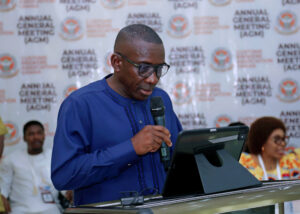
The Commissioner of the Customs Division of the Ghana Revenue Authority (GRA), Mr Aaron Kanor, has called on customs brokers across the country to strengthen compliance, uphold professional integrity and support government’s revenue mobilisation efforts, warning that fraudulent practices in the clearance chain will attract severe sanctions.
He stressed that customs brokers occupied a strategic position in Ghana’s international trade system, describing them as critical partners whose professionalism and accuracy directly influenced the efficiency of cargo clearance and the country’s ability to collect the appropriate revenue.
According to him, the accuracy of import declarations, valuation, tariff classification and supporting documentation largely depended on the work of customs brokers before such transactions reached Customs officers for examination.
The Commissioner expressed concern over persistent irregularities uncovered through post-interception examinations and customs audits, citing cases involving falsified vehicle particulars and the disappearance of goods from transit consignments between terminals.
He disclosed that such practices had cost the state tens of millions of cedis, with some incidents allegedly involving the complicity of licensed customs agents.
Mr Kanor consequently urged CUBAG members to make the AGM a turning point in their commitment to ethical conduct by ensuring that all declarations were accurate, import documents properly verified and goods correctly classified.
He assured compliant operators that the Customs Division would reward professionalism through improved trade facilitation measures, including pre-arrival processing, risk-based green-channel treatment and opportunities under the Authorised Economic Operator (AEO) programme.
He explained that these measures were intended to provide faster clearance for businesses that consistently demonstrate compliance with customs requirements.
However, he warned that operators who persistently engage in falsification, revenue evasion and diversion of transit cargo would face the full force of the law, including prosecution and possible revocation of their licences.
Touching on the Division’s reform agenda, Mr Kanor highlighted several initiatives aimed at modernising customs operations, reducing delays and improving transparency across the country’s ports.
He identified the Integrated Customs Management System (ICUMS) as a major component of the digital transformation process, facilitating paperless and more transparent customs clearance,
pointing to the expansion of pre-arrival processing, which allows importers and their agents to submit declarations and make payments before vessels arrive at port.
The Commissioner further highlighted the introduction of mandatory scanning and image analysis before physical examination, explaining that the approach was expected to make inspections more efficient and better targeted.
Mr Kanor, however, acknowledged that the success of the reform agenda depended on effective collaboration between Customs and industry stakeholders.
He therefore encouraged CUBAG to channel concerns relating to system downtimes, procedural uncertainties and operational delays through the Association’s leadership for the necessary attention.
He assured members that the Customs Division remained open to constructive engagement and would continue to consider industry feedback in shaping policies and improving service delivery, while urging brokers to lodge declarations early, ensure accurate valuation and classification, and facilitate prompt payment of duties and taxes to help bridge the revenue gap.
He emphasised that customs brokers were an integral part of the country’s revenue mobilisation machinery and must recognise their responsibility in supporting national development.
The Commissioner noted that revenue collected through Customs contributed to the provision of essential public infrastructure and services, including roads, hospitals and schools.
He maintained that while a modern Customs administration was essential to efficient trade facilitation, the integrity and professionalism of customs brokers were equally important in ensuring that the country’s trade system functioned effectively.
“The gate to Ghana’s trade swings on two hinges — a modern Customs administration and an honest, efficient broker. Let us oil both,” he stated, while calling for stronger cooperation between the Customs Division and CUBAG, stressing that sustainable progress in trade facilitation could only be achieved through collective responsibility.
In conclusion, the GRA Customs Commissioner urged members to make honesty and efficiency the defining principles of their operations, noting that reducing delays and improving the movement of goods remained critical to Ghana’s competitiveness as a trading destination.