


Calls for Strategic Agricultural Investment to Boost Food Production, Create Jobs and Strengthen Ghana’s Food Security…
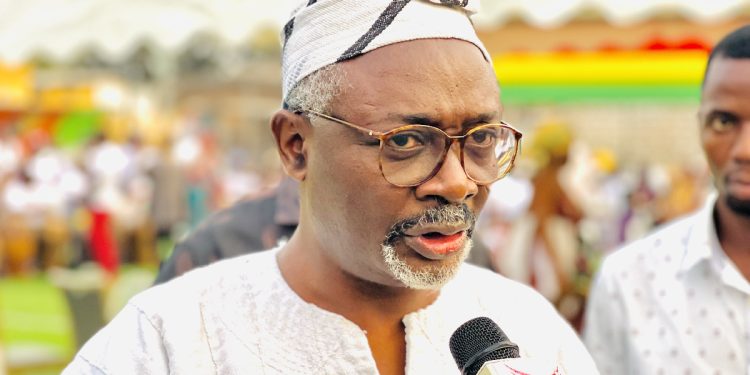
Businessman and national Vice Chairman Aspirant of the National Democratic Congress (NDC) Alfred Kofi Agbesi Woyome, has proposed the allocation and development of 1,000 acres of farmland in every constituency won by the National Democratic Congress (NDC) as part of a strategic intervention to transform Ghana’s agricultural sector.
The proposal, if adopted, could serve as a major catalyst for agricultural production, rural economic development and employment creation, particularly among the youth.
Woyome’s proposal underscores the need for a more deliberate and structured approach to agriculture, positioning farming not merely as a subsistence activity but as a viable commercial enterprise capable of generating wealth and supporting Ghana’s broader economic transformation agenda.
Under the proposed initiative, each beneficiary constituency would have access to 1,000 acres of farmland for organised agricultural production, with the potential to support large-scale cultivation, improve food availability and strengthen local agricultural value chains.
The initiative could also provide opportunities for young people to participate in commercial farming through organised farmer groups, cooperatives and agribusiness arrangements.
Ghana continues to face challenges relating to food production, rising food prices, youth unemployment and the high cost of agricultural inputs. A constituency-based agricultural development programme could help address some of these concerns by bringing investment and production opportunities closer to local communities.
Beyond increasing food production, the proposal presents an opportunity to stimulate economic activities across the agricultural value chain, including transportation, storage, processing, packaging and marketing.
The establishment of large-scale farms in constituencies could also encourage private-sector participation and attract investment into agricultural infrastructure, including irrigation systems, mechanisation facilities, warehouses and agro-processing plants.
However, the success of such an initiative would depend on effective implementation, transparent land acquisition arrangements, access to affordable financing, reliable markets and sustained technical support for farmers.
Stakeholders would also need to ensure that the proposed farmlands are supported by appropriate infrastructure and modern farming technologies to guarantee productivity and long-term sustainability.
The proposal comes at a time when Ghana is seeking innovative approaches to strengthen domestic food production, reduce dependence on imported food commodities and create sustainable employment opportunities.
If properly structured and implemented, Woyome’s proposal could provide a framework for constituency-level agricultural investment, turning available land resources into productive economic assets.
It could further reinforce the NDC’s commitment to inclusive economic development by making agriculture a central pillar of job creation, food security and rural industrialization.

