


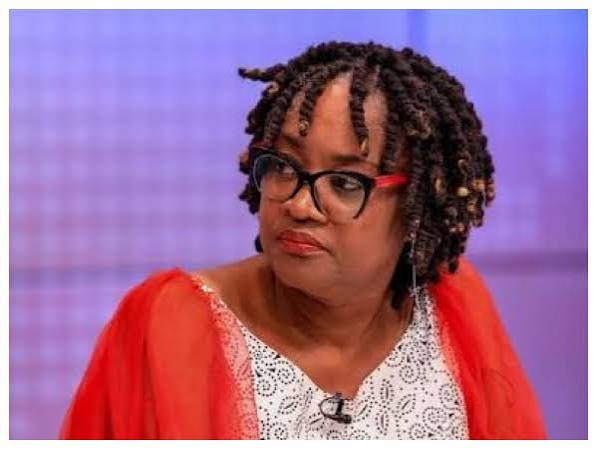
The Executive Secretary of the National Interest Movement, Susan Adu-Amankwah, has warned that children fast-tracked to write the Basic Education Certificate Examination (BECE) may struggle with basic responsibilities in senior high school because they lack the emotional maturity and life skills needed to function independently.
She argued that accelerating pupils through basic education without allowing sufficient time for development could leave them ill-prepared for secondary school, where they must manage personal tasks, adapt socially and take responsibility for themselves.
She made the remarks during an interview following the Education Ministry’s directive prohibiting pupils from sitting the BECE before completing the required period of basic education.
“If you push a 13-year-old to secondary school, where a 16-year-old is going, the child can’t wash his or her own things, can’t clean his own rooms, etc.”
Mrs Adu-Amankwah recounted an experience at her former senior high school, where she encountered concerns about students’ ability to undertake basic chores and maintain their surroundings.
Premature Bece Entry Raises Concerns Over Life Skills
She explained that during a visit, she noticed that the school environment was dirty and questioned a teacher about the condition of the premises. The teacher attributed the situation partly to the age of some students, explaining that several were too young to perform certain chores, while others did not know how to complete them.
“You go to some secondary schools sometimes, and you wonder why the schools have deteriorated so much, the children are not cleaning, they are not doing anything,” she recounted.
Mrs Adu-Amankwah maintained that such challenges should prompt parents and school authorities to reconsider the pressure to move children rapidly through the education system. Placing younger pupils in environments designed for older students, she warned, could expose gaps in their independence and readiness.
Emotional Maturity Matters Beyond Academic Ability
The National Interest Movement Executive Secretary cautioned against treating academic performance as the only measure of a child’s readiness to advance to the next stage of education.
She acknowledged that some children demonstrate exceptional intellectual ability at an early age but argued that strong academic performance does not automatically translate into social and emotional maturity.
“What is the rush for the child? Even for gifted children, sometimes when they are pushed ahead academically, they have psychological problems,”
Mrs Adu-Amankwah explained that children moved into classes with older students may struggle to fit in if they have not developed the emotional and social skills needed to navigate those environments.
She stressed that even when gifted pupils are academically capable of progressing, appropriate support structures must be available to prevent them from feeling isolated or left behind socially.
“Having a high IQ doesn’t necessarily mean that socially and emotionally ready for it,”
She maintained that intellectual ability should not be confused with overall readiness, as students may understand advanced academic material while remaining unprepared for the social demands of older classmates.
Education Ministry’s BECE Directive Gets Backing
Mrs Adu-Amankwah backed the Education Ministry’s decision to prohibit pupils from writing the BECE ahead of the appropriate academic stage, arguing that the measure would protect children’s broader development.
The directive addresses a practice in which some parents and school authorities accelerate pupils through basic education to enable them to sit the national examination earlier than scheduled.
She argued that children should spend the required time at each level of education to acquire the academic foundation, practical abilities and emotional readiness needed before progressing to senior high school.
Education, she maintained, should not become a race for early academic achievement at the expense of childhood development. Children need time to mature, learn to care for themselves and develop the confidence to interact with others before entering more demanding educational settings.
The concerns she raised extend beyond the examination to the expectations pupils encounter in secondary school. Students must adjust to new routines, interact with peers of different ages and undertake responsibilities that may not have been expected of them at earlier stages.
Her position is that progression through school should reflect both academic ability and developmental readiness. Although some pupils may be capable of completing the BECE earlier, she maintained that this should not come at the expense of their emotional wellbeing or ability to function independently.
The Education Ministry’s directive has renewed attention on when pupils are ready for the examination. Mrs Adu-Amankwah’s remarks add a developmental perspective, highlighting the need to prepare children for secondary school’s personal and social demands alongside academic achievement.

