President Mahama Pushes Agricultural Value Addition Across West Africa
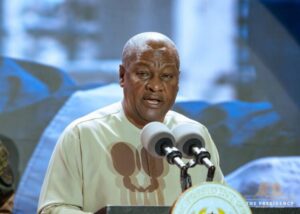
President John Dramani Mahama has called for increased investment in agricultural production and processing across West Africa, warning that the region’s dependence on imported food continues to undermine local industries, employment creation and economic development.
Addressing the West Africa Integration and Investment Summit (WAIIS) in Sierra Leone, the President said countries in the sub-region must harness their agricultural resources to achieve food self-sufficiency, strengthen domestic production and retain economic value within their economies.
He cited Ghana’s estimated US$3 billion annual food import bill, including rice and poultry, as evidence of the urgent need to expand local production, establish processing facilities and create stronger agricultural value chains.
“Anytime we consume imported rice or foreign chicken, we are exporting value and importing poverty.”
The President said West Africa’s agricultural potential remained largely underutilised despite the availability of arable land, favourable climatic conditions and a growing market for food products.
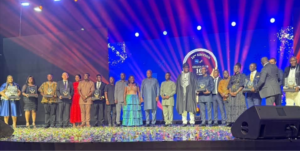
The summit, held in Freetown, Sierra Leone, brought together political leaders, investors, business executives and development finance institutions to discuss investment opportunities and regional economic integration.
Food Imports Drain Economic Value
President Mahama expressed concern that West Africa continued to import substantial quantities of food despite its capacity to produce many of the commodities consumed across the region.
He cited oil palm as an example of the region’s lost agricultural and industrial opportunities, noting that the crop originated in West Africa but was taken to Asia, where countries such as Malaysia and Indonesia developed extensive production and processing industries.
Today, Ghana and other West African countries import palm oil from those Asian producers, reflecting the gap between the region’s agricultural resources and its industrial capacity.
The President also questioned Ghana’s increasing dependence on imported poultry, recalling a time when households relied substantially on locally raised chickens for consumption.
He said the country’s poultry industry could be revitalised through investments in commercial farming, animal feed production, veterinary services, hatcheries and processing facilities.
The President argued that reducing food imports would not only improve food security but also create employment opportunities for farmers, processors, distributors and other participants across agricultural value chains, “What Is So Difficult About Developing Our Poultry Industry?”
He challenged policymakers and private sector actors to reconsider the economic consequences of importing products that could be competitively produced within Ghana and the wider West African region.
Agricultural Processing is Key to Africa’s Growth
President Mahama said agricultural transformation required more than increasing production, emphasising the importance of processing, packaging and marketing locally produced commodities for Africa’s Growth.
He explained that farmers could receive fertiliser, improved seeds and other production support but would struggle to realise the full economic benefits of their investments if they lacked access to processing facilities and reliable markets.
Rice production, he said, illustrated the challenge. Increasing output without sufficient milling capacity could leave farmers with unprocessed produce while consumers continued purchasing imported rice.
He therefore called for investments in modern rice mills, storage facilities, packaging operations and distribution networks to connect agricultural producers with domestic and regional markets.
“It is not enough to provide farmers with fertiliser and other support, enable them to produce rice and then leave them without processing facilities.”
The President said government must establish the conditions necessary for private-sector participation in agricultural processing, including access to financing, infrastructure, appropriate policies and investment incentives.
West Africa’s rice market presents a significant opportunity for agricultural investment. Regional consumption has continued to outpace production, creating substantial demand for imported rice.
Industry estimates published by African Business in September 2026 indicate that West Africa consumes approximately 22 million to 24 million tonnes of milled rice annually, while regional production supplies about 60 per cent of demand.
The resulting import dependence represents an opportunity for farmers, processors, equipment suppliers and financiers to expand regional production.
The President said investments in processing could help Ghanaian businesses move beyond primary production towards higher value products capable of competing with imported alternatives
Investment to Create Jobs and Strengthen Trade
President Mahama said agricultural value addition could support employment creation, particularly for young people, by establishing industries that require workers across production, processing, logistics, marketing and distribution.
The African Continental Free Trade Area (AfCFTA), headquartered in Accra, provides an opportunity for businesses to expand beyond national borders and develop regional supply chains for agricultural products.
He said investors should consider opportunities in rice, poultry, oil palm, sugar and other commodities where regional demand could support large scale commercial production.
The President also emphasised the importance of partnerships between governments, farmers, financial institutions and private businesses in mobilising capital for agricultural transformation.
He said governments must provide the enabling environment, while private-sector investors establish and operate businesses capable of improving productivity, processing and market access.
The summit’s broader investment agenda included agriculture, energy, infrastructure, strategic minerals and digital transformation, with regional cooperation identified as essential to attracting investment and accelerating economic development.
The President’s remarks reinforce Ghana’s broader agricultural industrialisation agenda, which seeks to reduce import dependence, expand domestic production and strengthen processing across priority value chains.