Zanetor Agyeman-Rawlings Voices Africa’s Disappointment Over COP31 Adaptation Outcomes
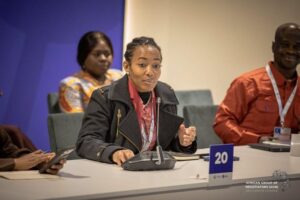
Ghana’s Minister for Environment, Science and Technology, Dr Zanetor Agyeman-Rawlings, has expressed the African Group of Negotiators’ disappointment with COP31 outcomes in Antalya, Türkiye, particularly the lack of progress on adaptation finance, the Global Goal on Adaptation and National Adaptation Plans.
Delivering the group’s concluding message on behalf of African nations, Dr Agyeman-Rawlings stated that Africa had entered the conference expecting an ambitious outcome that would respond to the continent’s needs and advance existing commitments. She aligned the African Group with the statement delivered by Uruguay on behalf of the G77 and China.
“We regret to say that we leave Antalya disappointed.”
The minister acknowledged the work of the COP31 co-presidency, the Turkish government and people, the UN Framework Convention on Climate Change secretariat and participating parties. She commended the conference leadership for bringing negotiating groups together during two weeks of discussions.
Africa Seeks Adaptation That Matches Climate Risks
She argued that overshooting the threshold would produce irreversible impacts and increase adaptation costs for vulnerable countries. Referring to Article 7, paragraph 4 of the Paris Agreement, she maintained that climate action must account for both higher mitigation ambition and increased adaptation needs and costs.
For the African Group, adaptation measures and financing must reflect those requirements if the widening adaptation gap is to be addressed. “Adaptation must match those needs and costs if we are to close the adaptation gap,” she stressed.
Disappointment Over Adaptation Finance
The African Group’s strongest criticism concerned what Dr Agyeman-Rawlings described as the failure to secure a meaningful outcome on the means of implementation, particularly the tripling of adaptation finance.
She characterised the outcome as a regression from progress made at the previous climate negotiations in Belém, arguing that parties should build on earlier commitments rather than weaken them.
“We see this as a regression from the progress made in Belém. Belém made a promise to the most vulnerable, Antalya should have been about delivering on it, not reneging or renegotiating”.
Her remarks placed financing at the centre of Africa’s assessment, with the group arguing that adaptation commitments must be matched by resources for implementation.
African Group Calls for Party-Led Adaptation Process
Dr Agyeman-Rawlings also outlined concerns about the proposed task force under the Global Goal on Adaptation. She insisted that its members should be experts selected by parties and that its work should remain subject to clear, party-led oversight.
The group called for the task force to report to the 66th session of the Subsidiary Bodies (SB 66) for interim guidance, and to SB 67 with its final report. The minister argued that the process must remain party-driven, drawing on experience from previous climate negotiations.
For the African Group, the composition, oversight and reporting arrangements are important to ensuring that the adaptation process reflects participating countries’ priorities.
The minister also expressed disappointment that National Adaptation Plans were not prioritised during the negotiations. She identified the lack of attention to the agenda item as another shortcoming, adding to concerns over adaptation finance and the Global Goal on Adaptation.
Dr Agyemang-Rawling’s statement did not outline a specific alternative decision or timetable for advancing the National Adaptation Plans agenda, but made clear that African negotiators had expected the issue to receive greater priority.
Climate Responsibility to Future Generations
Beyond the negotiating details, Dr Agyeman-Rawlings framed climate action as an obligation to present and future generations. She warned that delayed action would leave communities facing desertification, flooding and the loss of homes and livelihoods.
“When leaders refuse to pay for the climate today, they are simply borrowing a much bigger debt from our children.” She invoked the principle that the Earth is borrowed from future generations, arguing that countries must contribute their fair share to addressing the climate crisis.
The African Group’s concluding position combined appreciation for the conference leadership with dissatisfaction over the adaptation outcomes. Dr Agyeman-Rawlings urged parties to honour existing commitments, strengthen adaptation support and ensure that subsequent negotiations deliver the finance and decisions vulnerable countries require.